If you own a pond, you’ve probably dealt with aquatic weeds at some point. A certain amount of vegetation is beneficial and even necessary for a healthy fishery, but when plants begin taking over, they can create serious problems for both the pond and the people who enjoy it.
One of the most effective long-term solutions available is stocking sterile triploid grass carp. These fish have been used for decades throughout the Southeast as a natural method of aquatic vegetation control, helping pond owners reduce weed growth while minimizing dependence on herbicides.
Why Aquatic Vegetation Becomes a Problem
Aquatic plants provide important benefits. They help stabilize sediments, produce oxygen during daylight hours, provide habitat for insects and forage species, and offer spawning areas for fish.
However, excessive vegetation can quickly shift from beneficial to problematic.
When weeds become too dense, they can:
- Restrict fishing access
- Interfere with boating and swimming
- Reduce water circulation
- Contribute to nighttime oxygen depletion
- Create ideal mosquito habitat
- Make pond management more difficult
- Outcompete desirable native vegetation
Many pond owners find themselves fighting the same vegetation year after year. While herbicides can provide quick results, grass carp offer a long-term biological solution that continues working around the clock.
What Are Grass Carp?
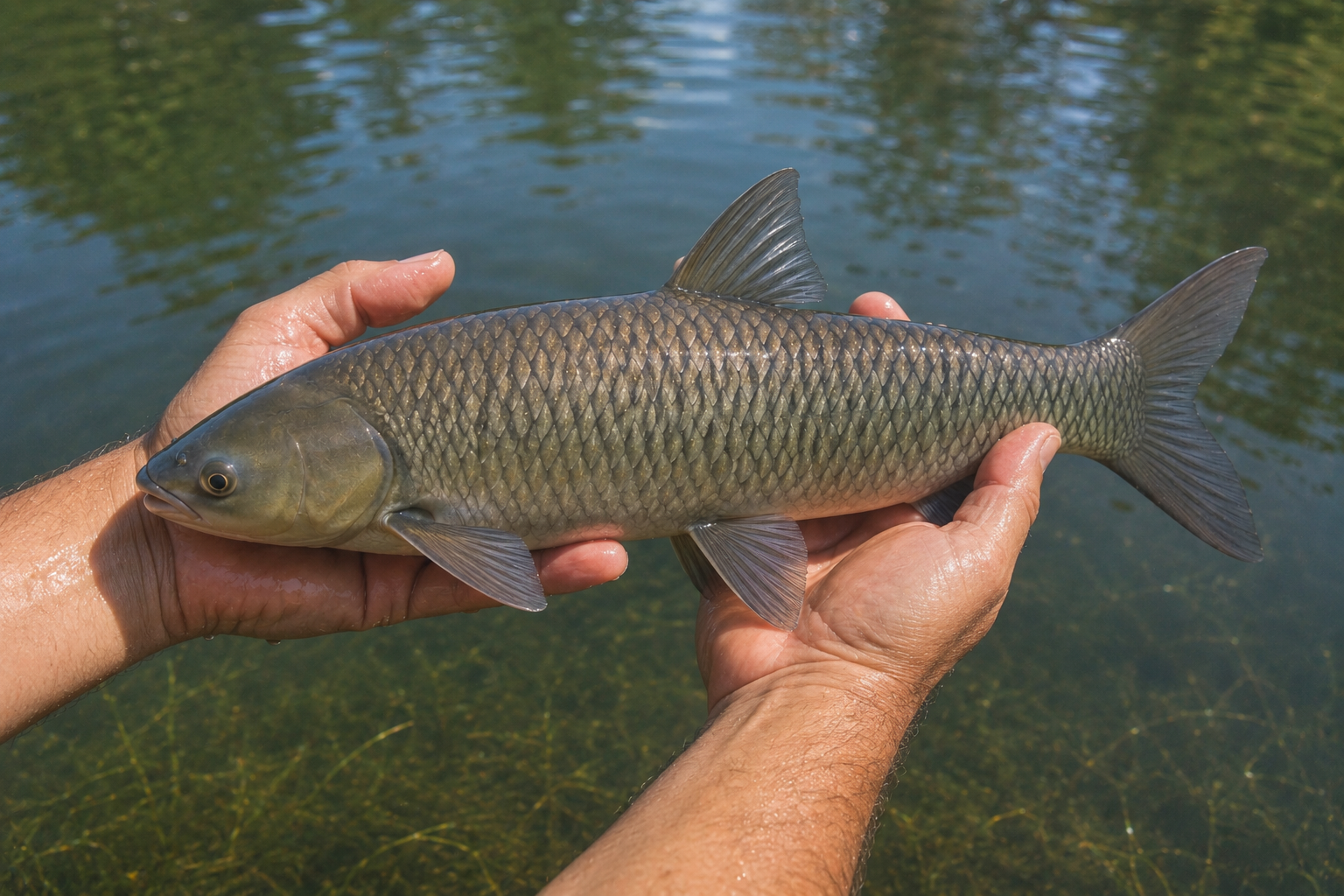
Grass carp (Ctenopharyngodon idella) are large herbivorous fish originally native to Asia. They were introduced into the United States for vegetation management and have become one of the most widely used tools for aquatic weed control.
Unlike most fish stocked in ponds, grass carp feed primarily on aquatic plants. As they grow, they consume significant amounts of vegetation and can help reduce problem weeds over several years.
Under favorable conditions, grass carp commonly grow beyond 30 inches and may exceed 40 pounds.
Which Plants Do Grass Carp Control?
Grass carp are most effective on submerged vegetation growing beneath the water’s surface. Their preferences can vary, but they commonly consume many troublesome species found throughout Georgia and the Southeast.
Some of the plants they frequently help control include:
Hydrilla
Hydrilla is one of the most aggressive invasive aquatic plants in the United States. It spreads rapidly and can form thick underwater mats that interfere with fishing, boating, and oxygen circulation. Grass carp are often highly effective at reducing hydrilla infestations.
Southern Naiad
This native submerged plant provides habitat for fish and invertebrates, but it can quickly dominate a pond when conditions are favorable. Dense growth can create management challenges and reduce recreational use.
Slender Spikerush
While beneficial in moderation, slender spikerush can spread aggressively in some ponds and become difficult to manage without intervention.
Water Thread Pondweed
This fine-leaved submerged plant serves as valuable habitat but may form dense growth in nutrient-rich waters.
Bladderwort
Known for its tiny insect-trapping bladders, bladderwort is an unusual aquatic plant that can become abundant enough to interfere with pond use.
Because every pond is different, identifying your vegetation before stocking grass carp is important. Some plant species are readily consumed, while others may be less desirable to the fish.
How Fast Do Grass Carp Grow?
Grass carp are among the fastest-growing fish found in ponds.
Typical growth rates include:
- Year 1: 10–14 inches
- Year 2: 18–24 inches
- Year 3–4: Often exceed 30 inches
- Mature Fish: Can surpass 40 inches and 40 pounds
Growth rates depend on water temperature, available vegetation, stocking density, and overall pond productivity.
In ponds with abundant food supplies, grass carp can reach impressive sizes surprisingly quickly.
Stocking grass carp can significantly reduce the growth of problematic weeds in your pond.
How Long Do Grass Carp Live?
Grass carp are a long-lived species.
Many fish can survive 15 years or longer, although their most effective weed-control years typically occur during the first 5 to 10 years after stocking.
As the fish age, their feeding activity gradually declines. For this reason, some pond owners choose to supplement their population periodically to maintain consistent vegetation control.
Why Must Grass Carp Be Sterile?
Most states, including Georgia, require the use of sterile triploid grass carp.
Triploid fish possess three sets of chromosomes instead of the normal two. This makes them incapable of reproducing.
The sterility requirement helps protect rivers, reservoirs, and natural waterways from unintended grass carp reproduction. Fertile populations could dramatically alter native plant communities and negatively impact aquatic ecosystems.
Every certified triploid grass carp sold through approved suppliers undergoes testing to verify sterility before being stocked.
When purchasing grass carp, always make sure they come from a licensed supplier that provides certified triploid fish.
How Many Grass Carp Should Be Stocked?
Proper stocking rates are critical.
Too few fish may provide little benefit, while too many can eliminate nearly all vegetation and create new management challenges.
General recommendations often range from:
- 10 fish per acre for light to moderate vegetation
- 15-20 fish per acre for heavier infestations
- Higher rates may be appropriate for severe hydrilla problems
Every pond is unique, and factors such as plant species, pond depth, water clarity, and management goals should be considered before determining a final stocking rate.
A site-specific recommendation usually produces the best results.
Grass Carp Are Part of a Complete Management Plan
Grass carp are an excellent tool, but they are not a cure-all.
The best pond management programs combine multiple strategies, including:
- Proper fish stocking
- Water quality management
- Nutrient control
- Aeration when needed
- Responsible vegetation management
- Regular pond evaluations
When incorporated into an overall management plan, grass carp can provide years of reliable vegetation control with very little maintenance.
Before You Stock Grass Carp
Before introducing grass carp into your pond, remember to:
- Verify state permit requirements
- Purchase only certified triploid fish
- Evaluate the vegetation species present
- Determine an appropriate stocking rate
- Prevent escape if your pond connects to public waters
- Monitor vegetation levels over time
A little planning up front can help ensure successful results for years to come.
Need Help With Aquatic Weed Control?
If aquatic vegetation is becoming difficult to manage, sterile triploid grass carp may be the solution you’re looking for.
At Edge’s Aquatic, we help pond owners throughout the Southeast develop customized vegetation management plans based on their specific goals and pond conditions.
Whether you’re dealing with hydrilla, southern naiad, bladderwort, or other troublesome aquatic plants, we can help determine if grass carp are the right fit for your pond.
Our Services Include:
- Sterile Triploid Grass Carp
- Fish Stocking
- Electrofishing Surveys
- Aquatic Vegetation Management
- Pond Aeration and Fountain Installation
- Water Quality Improvement
- Pond Consulting and Management Plans
Fish We Stock:
- Oxbow Largemouth Bass
- Bluegill
- Shellcracker
- Golden Shiners
- Fathead Minnows
- Channel Catfish
- Crappie
- Sterile Triploid Grass Carp
Edge’s Aquatic
Home of the Oxbow📞 For Georgia and Southeastern states:
Edge’s Aquatic
Soperton, GA
Phone: (912) 529-3315
Website: www.pondstockingofgeorgia.com
“We sell quality, not quantity.” “Edge’s Aquatic is Home of the Oxbow Bass.”Bass
Serving portions of Georgia, Alabama, Florida, North Carolina, and South Carolina with professional pond and lake management solutions.
Contact us today for a free consultation and let us help you build a healthier, more productive pond.
Kim, Keith, and The Team
Edge’s Aquatic
Find us on social media: